

On September 1, GRESB released the 2025 Real Estate Assessment results for the 2024 performance cycle. These scores are so much more than a benchmarking exercise, they reveal whether portfolios are truly prepared for the transition risks reshaping global markets. For owners, investors, and managers, the message is clear: you must act now. Real estate must deliver, not just disclose.
Before exploring how to leverage this year’s scores, it’s important to understand a few key changes coming to the 2026 assessment. These updates, reflecting 2025 performance, will shift the focus toward actual performance and implementation, not just disclosure, reinforcing the need for portfolios to act on transition risks now.
Scoring Changes of Note for 2026 (2025 Performance):
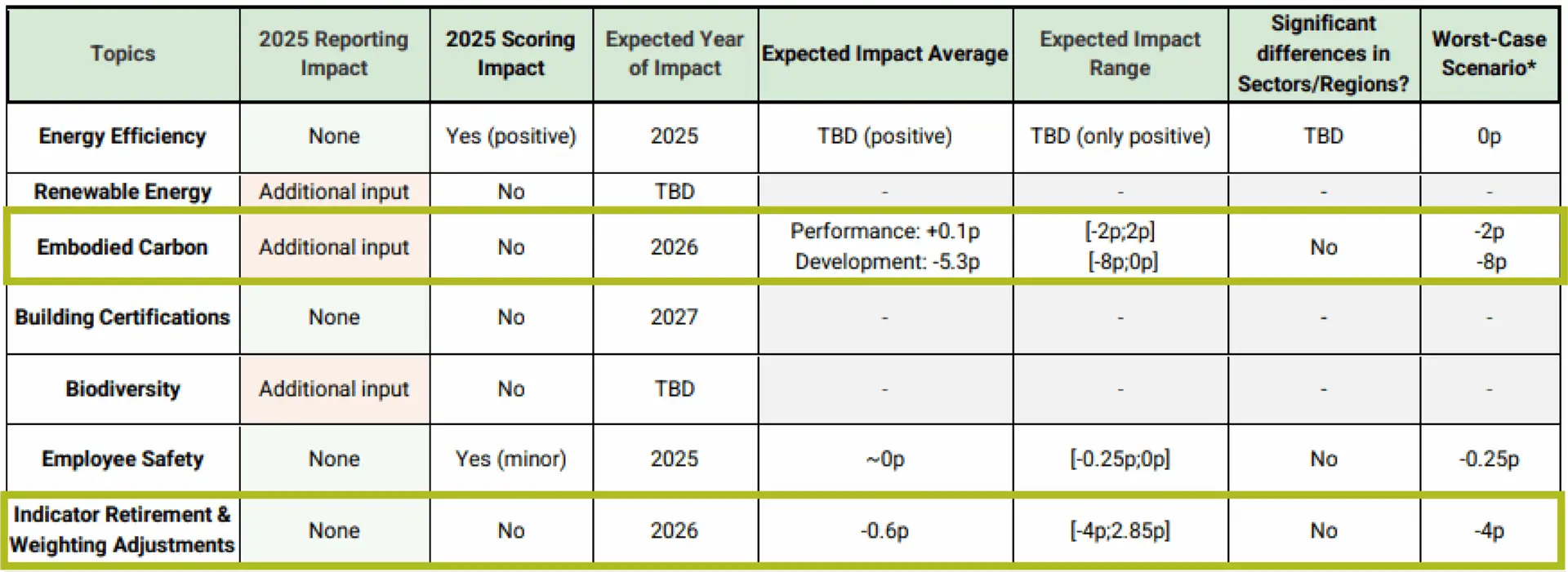
Changes to weighting for transition risk
Transition risk is evolving as regulations, investor expectations, and tenant demands converge. GRESB is increasing the weight of indicators tied to Risk Management and decreasing those tied to Risk Assessment. The takeaway: scoring will reward entities that not only identify risks but also have a systematic process for managing them.
- Reprioritization away from one-off risk “assessments” and toward other performance categories tied to improvements
- Increased importance around climate and regulatory risk, added weight for having a process for identifying transitions as well as where risk has been identified in the categories of policy and legal, technology, market, and reputation.
The winners will be those who act now, building systematic processes that capture risks and implementing solutions that reduce them.
Embodied Carbon
Embodied carbon was added to the reporting framework in 2025 for testing. While it won’t impact scores this year, it will be scored starting in 2026 based on 2025 performance. Entities that begin capturing embodied carbon data now will be positioned for success when scoring begins.
Greater Demand for Evidence
GRESB is placing more weight on evidence of implementation across the assessment. Policies alone are no longer enough—investors and regulators want to see measurable action.
Data Coverage is The Foundation
A stronger GRESB score is a byproduct of sound portfolio management. Data coverage is step one—the foundation for understanding how assets are performing and where the greatest opportunities lie for efficiency and resilience. Yet it remains the area where most portfolios leave points on the table.
Of the 32 points available across energy, water, waste, and GHG performance, 20 are tied to data coverage. As peers improve, those who neglect coverage will be at a growing disadvantage. Data coverage is critical because:
- Scoring: Without asset-level data, performance points cannot be earned.
- Operations: Data enables daily performance tracking and compliance with regulatory requirements.
Challenges often arise from tenant-controlled spaces or lack of access to utility data. Solutions include green leases, shadow metering, and aggregated utility data, practices that are rapidly becoming industry standard.
2025 also marked the introduction of GRESB’s Residential Supplement, the first application of a residential-specific framework. While it does not affect the main Standard’s scoring, it reinforces the growing importance of comprehensive, reliable data coverage for residential participants.
RESIDENTIAL SPOTLIGHT
2025 also marked the introduction of GRESB’s Residential Supplement, the first application of a residential-specific framework. GRESB is recognizing the challenges that this sector faces in data, but also recognizes that obtaining data is essential. This reporting standard will continue to evolve, and while it does not affect the main Standard’s scoring, it reinforces the growing importance of comprehensive, reliable data coverage for residential participants.
From Coverage to Performance
Once data coverage is established, the next priority is performance. Up to 15 points are tied to efficiency improvements:
- 12 points for like-for-like improvements in energy, water, waste, and GHG.
- 3 points for implementing GRESB-targeted measures.
The most impactful and common measures we tend to see include:
- LED lighting and controls
- Heat pump domestic water heaters
- Retro- or digital commissioning
- Smart HVAC controls
- Low-flow water fixtures
- Onsite power generation
- High-efficiency HVAC replacements at end of life
GRESB is steadily shifting weight toward implementation. With robust data, managers can identify opportunities at both the asset and portfolio levels. However, meaningful performance gains rarely happen in a single year. Operational changes and capital improvements should be aligned with long-term strategy. For many, a two-year improvement cycle is the most realistic path: use the current feedback to prioritize, plan, and begin execution now so that results appear in 2026 scores.
What to Do When Scores Are Released
- Log into the GRESB Portal to review your assessment results.
- Check for corrections: You may request changes if errors are found, though fees may apply. GRESB staff can assist in re-opening assessments.
- Expect no surprises: The results should match the data submitted earlier this year, but this is your opportunity to confirm.
Most importantly, remember that you have four months after results are released to make improvements before the next reporting cycle opens. Use this time wisely:
- Identify low-cost measures that can be completed quickly.
- Begin planning higher-impact improvements that deliver both points and long-term value.
- Balance immediate opportunities with strategic investments that align with asset performance goals.
Why Action Now Matters
Your 2026 GRESB score reflect the actions you take in 2025. The steps you take now to close data gaps, strengthen risk management, plan for embodied carbon, and embed efficiency measures, will define how your portfolio is positioned next year. Waiting risks both falling behind peers and eroding long-term asset value.
Want to discuss your score or year-end strategy? Reach out to the GreenGen team: