
From the Experts: 3 GRESB Changes Every Real Estate Fund Should Know About

GreenGen’s From the Experts series highlights insights from GreenGen professionals on emerging trends, challenges, and opportunities shaping real estate performance and value.


By:

Summer Hazlewood GreenGen

Summer Hazlewood

Program Manager

 
As a GRESB Accredited Professional supporting clients through reporting and ESG program implementation at GreenGen, I’ve seen firsthand how quickly GRESB continues to evolve. 

The changes over the next few years are going to have a real impact on how portfolios are evaluated. If you’re already participating (or considering it) there are a couple of key shifts worth paying attention to.  Here are three of the biggest upcoming changes I’m watching right now: 


1. Performance is About to Matter A Lot More 

At a glance:  

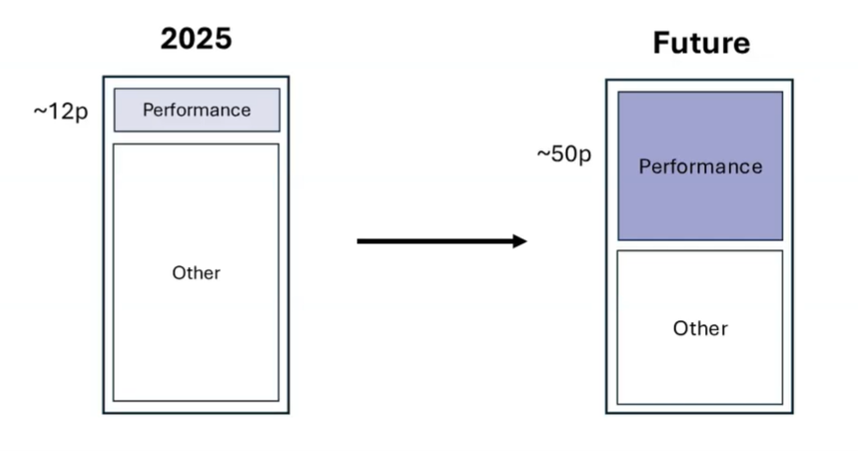
  • Performance is expected to grow to ~50% of the total GRESB score by 2034 (up from ~12% in 2025) 
  • Energy and GHG metrics could account for ~25% of total scoring 
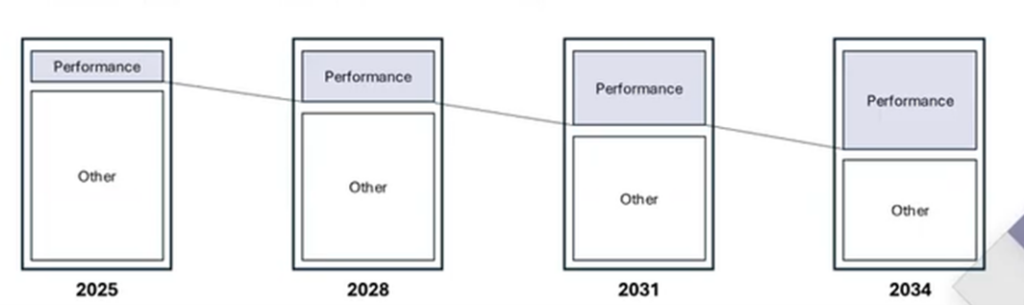
  • Changes will be phased in every 3 years, with the next major update in 2028 (reporting 2027) 


One of the biggest changes on the horizon is the growing importance of performance within GRESB scoring. Performance has always been a core component of GRESB, but it’s about to carry much more weight. They define performance as either how efficient an asset is today, or how much it’s improving year-over year. GRESB is moving toward a model where actual results, particularly around energy and emissions, carry significantly more weight than they do today.  

To put that into perspective, performance accounts for about 12% of the score in 2025. Over time, that’s expected to increase to around 50%, with energy and greenhouse gas (GHG) performance alone potentially making up about a quarter of the total score.


The GRESB Foundation envisions at least 50% of the GRESB Score to relate to “performance” in the future (source):
This isn’t happening all at once, GRESB is taking a staged approach with updates rolling out every three years. The next major milestone is expected in 2028 (based on 2027 reporting), when energy and GHG performance will begin to take on a more prominent role.  


Target years for future performance-related updates (source):
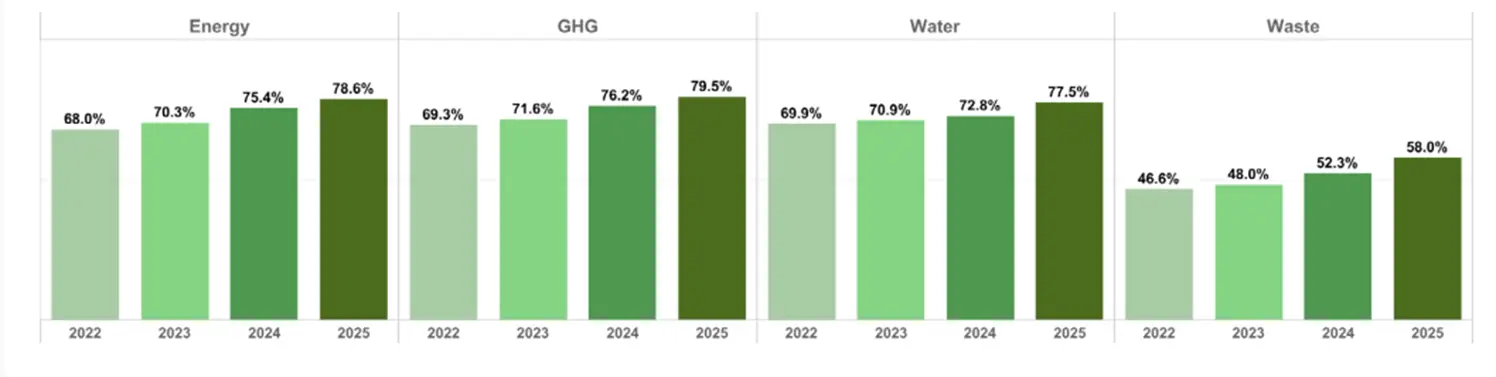
While data gaps still exist in certain markets, GRESB has seen steady year-over-year improvements in coverage across participants. Still, for many organizations, this is where the real challenge sits. Strengthening your data foundation now will make it much easier to adapt as performance becomes a larger driver of scoring.  


Trends in Average Data Coverage for All GRESB Participants (source):
A few ways to get ahead before these weighting changes go into effect:  

  • Invest in smart meters to capture real-time usage data 
  • Increase tenant and resident engagement to improve data sharing 
  • Partner with utilities to access aggregated whole-building data 
  • Incorporate green lease language that supports utility data collection 


As performance becomes a larger driver of scoring, having the right data and infrastructure in place will make all the difference. 


2. The Basics Are No Longer What Sets You Apart 

At a glance:  

  • 17 Management indicators (~18% of points) are now considered widely adopted 
  • These indicators may be reported once every 3 years, instead of annually 
  • Scoring weight is expected to shift away from these fundamentals towards performance 


Another important shift coming out of GRESB is how certain management practices are being treated. Many of the policies, processes, and disclosures that historically helped drive scores are now widely adopted across the industry. 
 

Through its review of the Standard, GRESB identified a set of 17 Management indicators that are achieved by more than 80% of participants (source). These are increasingly being viewed as common practice, rather than areas of differentiation. As a result, GRESB is beginning to rebalance how these indicators are weighted within the assessment.  

Rather than continuing to reward these items year over year, they will move towards a more streamlined approach – reported less frequently (every three years) and carrying less influence on overall scoring over time. This shift is also intended to help reduce the reporting burden, allowing organizations to focus more on performance and less on repeating the same disclosures annually. 

This doesn’t mean these areas are going away – they will form the foundation of a strong sustainability program. But it does signal a change in how GRESB is differentiating participants. Having policies and processes in place is increasingly expected; what matters more now is how those translate into measurable results.  

What this means in practice:  

  • Make sure your core policies and processes are solid and consistent, but don’t rely on them to drive your score 
  • Start shifting focus towards performance outcomes and measurable improvements 
  • Use the reduced reporting burden as an opportunity to reallocate time and resources towards data quality and performance tracking 


Having the fundamentals in place is still important, but it’s no longer what will move the needle on your score. 


3. Sector-Specific Assessments are Expanding (and Still Evolving)

GRESB has been expanding its approach to better account for differences across property types. While this is a positive step, the reality is that these sector-specific assessments are still evolving, and in some cases, they don’t fully align with how scores are calculated in the main benchmark report.  

For residential portfolios, GRESB introduced a dedicated component for entities with more than 75% residential assets (by GAV). This provides additional insights specific to the sector, but doesn’t currently impact the official GRESB score or ranking. As a result, many resident-focused funds still find themselves measured against benchmarks that don’t always reflect the operational realities of their assets.  

We’ve seen this create some challenges, particularly where there’s investor pressure tied to achieving certain scores or ratings. In some cases, firms have stepped back from reporting altogether, while others have continued and used it as an opportunity to differentiate themselves, supported by more transparent internal discussions about how to interpret the results.  

At the same time, GRESB is piloting a new assessment for data centers, launching with the 2026 reporting cycle. This is notable shift, as it moves away from the traditional real estate metrics that don’t always apply to highly specialized, operationally intensive assets. Instead, the focus on data centers is on areas like energy, carbon, water, grid interaction, and broader operational impacts.  

What to keep in mind:  

  • Sector-specific scores (like residential) don’t yet impact overall GRESB scores or rankings 
  • Some asset types are still at a disadvantage under the traditional benchmark framework 
  • GRESB is actively working toward more tailored, sector-relevant scoring approaches 


Until those changes are fully implemented, particularly around incorporating rating systems like stars into sector-specific results, it’s important for organizations to align internally on expectations and clearly communicate with stakeholders about what GRESB scores do (and don’t) represent. 
 

Overall, these changes point to a clear direction for where GRESB is heading. Performance is becoming a much larger driver of scoring, widely adopted practices are no longer what sets participants apart, and sector-specific approaches are still working toward better alignment. 

For organizations, this makes early planning critical. Waiting until these changes are fully implemented will make it much harder to adapt, especially when it comes to data infrastructure, performance tracking, and internal alignment. Taking steps now to strengthen data quality, improve coverage, and focus on measurable outcomes will put you in a much better position as these updates are phased in. 

At GreenGen, we see GRESB as more than just a score. It’s a useful framework to guide ESG strategy, prioritize investments, and track progress over time. The organizations seeing the most value are the ones using GRESB to inform decision-making, not just report results. 


Want to learn more? Reach out to the GreenGen team: